
Oxford University Museum of Natural History: The 2026 Visitor Guide
The Oxford University Museum of Natural History is a time machine disguised as a cathedral, where iron ribs and glass panes shelter stories older than language. Step inside and epochs stack like pages in a ledger, each specimen a footnote to Earth’s long argument with itself.
This guide opens the cover—what to see, how to navigate the hall, and why this building still hums with discovery.
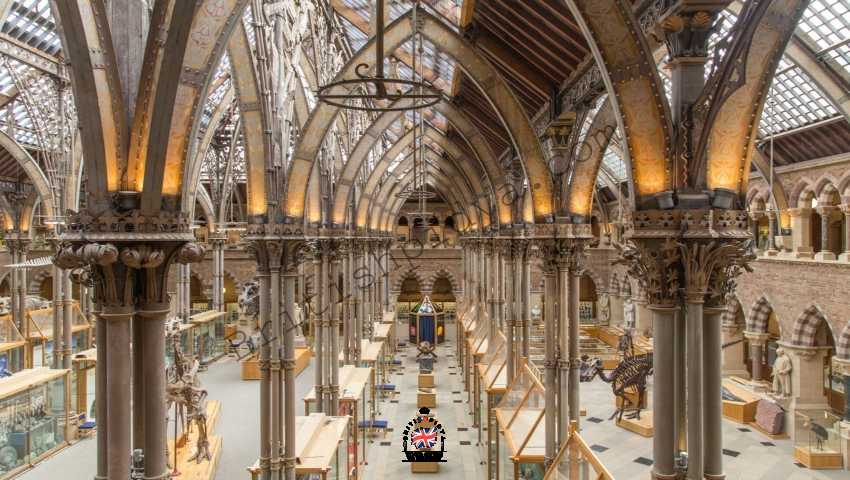
Oxford University Museum of Natural History: Where Science Became Public
Opened in 1860, the Oxford University Museum of Natural History (often called OUMNH) was radical for its time. Instead of hiding specimens in private collections, Oxford placed science in a public space—literally inviting debate.
It was here that the famous 1860 evolution debate took place, following the publication of Charles Darwin’s On the Origin of Species. The building itself was designed to embody scientific transparency: light, openness, and visible structure.
From Dodo to Dinosaurs: Extinction Made Real
The museum holds the only surviving soft tissue of a dodo anywhere in the world. This single specimen has reshaped scientific understanding of extinction—not as an abstract idea, but as a human-driven event.
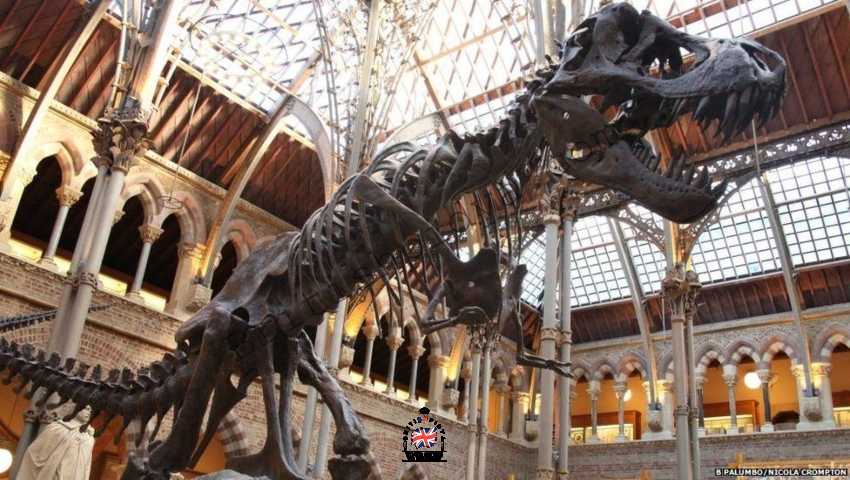
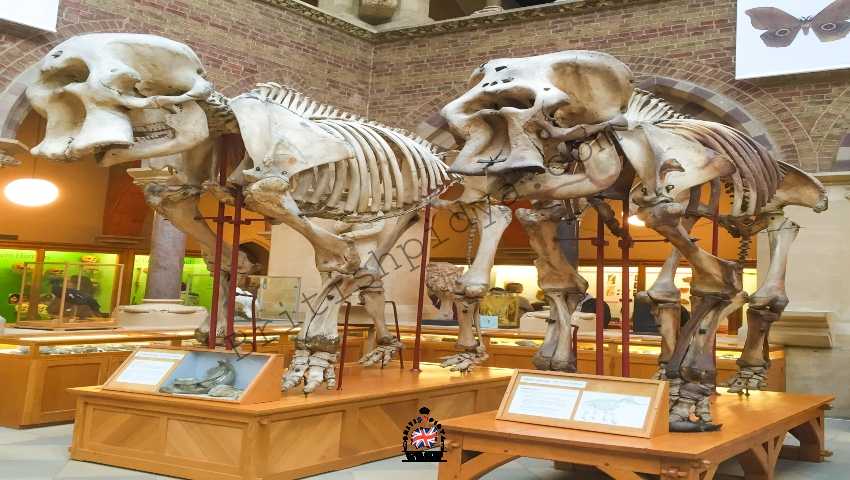
Nearby, towering dinosaur skeletons pull you back hundreds of millions of years. These aren’t replicas for entertainment; they are research-grade specimens still used by scientists today.
Minerals, Meteorites, and the Hidden Story of Earth
The mineralogical collections reveal Earth as a restless, evolving system. Meteorites older than our planet sit alongside gemstones formed under impossible pressures.
This is geology not as decoration, but as evidence.
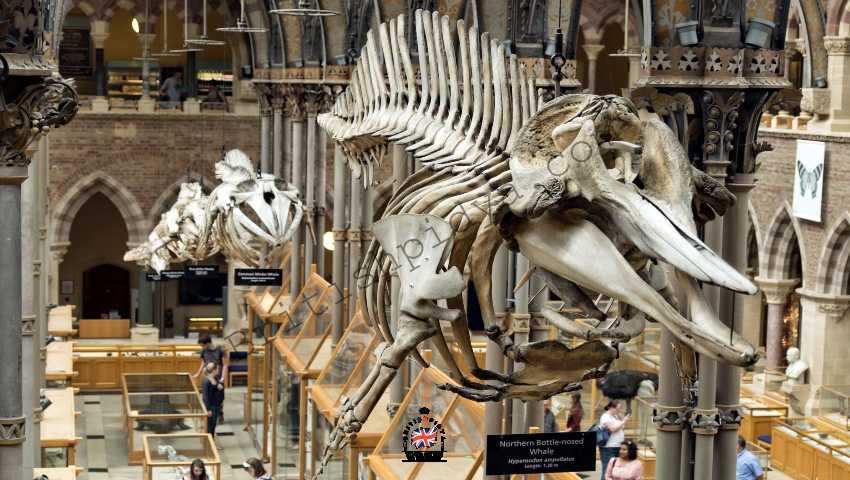
Architecture That Teaches Without Words
Many museums display science. This one is science.
The neo-Gothic structure, designed by Benjamin Woodward, uses architecture as education. Every material choice reinforces the idea that nature is structured, patterned, and knowable.
The Great Glass Roof
The museum’s roof consists of over 8,500 individual glass panels, flooding the main court with natural light. This wasn’t aesthetic vanity—it was a declaration that knowledge should be illuminated, not hidden.
Stone Columns Carved with Living Species
There are 126 stone columns inside the museum, each carved with a different plant species—accurately rendered from real botanical specimens. Art and taxonomy merge here in a way few buildings have ever attempted.
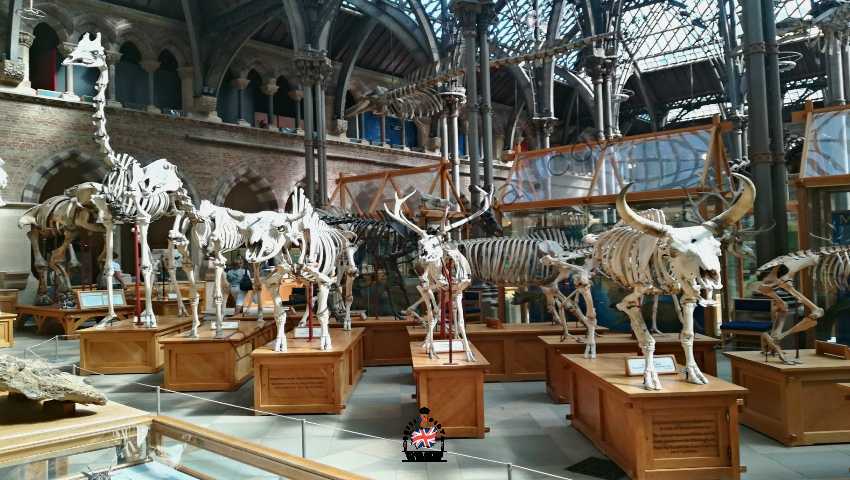
Education, Research, and Why This Museum Still Matters
OUMNH is not frozen in time. Its collections—over 7 million objects—are actively used by researchers studying biodiversity loss, climate change, and evolutionary biology.
Public programmes in 2026 include guided tours, family science sessions, and specialist lectures, many of them free.
Visiting in 2026: What You Need to Know
Address: Oxford University Museum of Natural History, Parks Road, Oxford, OX1 3PW, United Kingdom
Opening hours (2026):
Monday–Sunday: 10:00–17:00
Last admission: 16:45
Closed: 24–26 December
Entry fee: Free (donations welcome)
Telephone: +44 (0)1865 272 950
Official website: oumnh.ox.ac.uk
Best Time to Visit
Weekday mornings are the quietest. Weekends attract families and tourists, especially between 11:30 and 14:30. Allow 1.5 to 3 hours for a meaningful visit.
Landmarks Near the Museum
Pitt Rivers Museum (connected internally)
Oxford Botanic Garden: 1.4 km
Oxford Castle & Prison: 2.2 km
Hotels Within Walking Distance
The Randolph Hotel (5-star): approx. 800 m
Malmaison Oxford (4-star): approx. 2.3 km
Why This Place Changes How You See Museums
You arrived thinking this was a museum about the past.
You leave realising it’s about responsibility—what knowledge demands of us, and what extinction teaches when it’s no longer theoretical.
The Oxford University Museum of Natural History doesn’t ask you to admire science.
It asks you to think.