Trading Ports in the UK: The Real Power Map for 2026
Britain’s ports are the country’s circulatory system, pumping goods, data, and leverage through saltwater arteries. Container cranes rise like metronomes, setting the tempo of trade, while shipping lanes sketch a living diagram of power.
In 2026, these harbours aren’t museum pieces; they’re switches on a national circuit, deciding speed, cost, and influence. Follow the tide lines, and the real power map comes into focus.
But in 2026, the truth is sharper—and more uncomfortable.
Britain’s trading ports are no longer about history. They are about leverage. Energy security. Food supply. Inflation. And whether the UK can still move goods fast enough to stay competitive in a fractured global economy.
This isn’t a list. It’s a map of power.

Trading ports UK in 2026: what’s actually changed
According to the UK Department for Transport, 429.7 million tonnes of freight moved through UK ports in 2024—the lowest level since records began in 2000.
That sounds like decline.
It isn’t.
What’s happening instead is concentration. Fewer ports. Bigger bets. Higher stakes. London, Grimsby and Immingham alone now handle over 30% of all UK port tonnage.
Ports that can’t move fast, deep, and clean are being left behind. Ports that can are quietly becoming the backbone of the UK economy.
Port of London: still the heavyweight
The Port of London isn’t a single dock. It’s a 95-mile economic corridor running along the Thames.
In 2024, London handled 12% of all UK port freight—more than any other port group in the country.
Its strength isn’t containers. It’s diversity: petroleum products, construction materials, food, vehicles, waste exports, and high-value logistics feeding directly into the UK’s largest consumer market.
The Port of London Authority now frames its future around the Thames Vision 2050: cleaner vessels, smarter navigation, and tighter integration with road and rail. This isn’t nostalgia. It’s survival.
Port of Immingham: Britain’s quiet giant
If you measure importance by containers, Immingham looks modest.
If you measure it by weight, it dominates.
Immingham is the largest port in the UK by tonnage, handling around 46 million tonnes annually. Energy products, bulk commodities, biomass, steel inputs—this is the port that keeps lights on and factories running.
Its deep-water access (up to 16.5m), direct rail links, and proximity to refineries make it strategically irreplaceable. When energy markets shake, Immingham feels it first—and absorbs the shock.
Port of Felixstowe: the container king
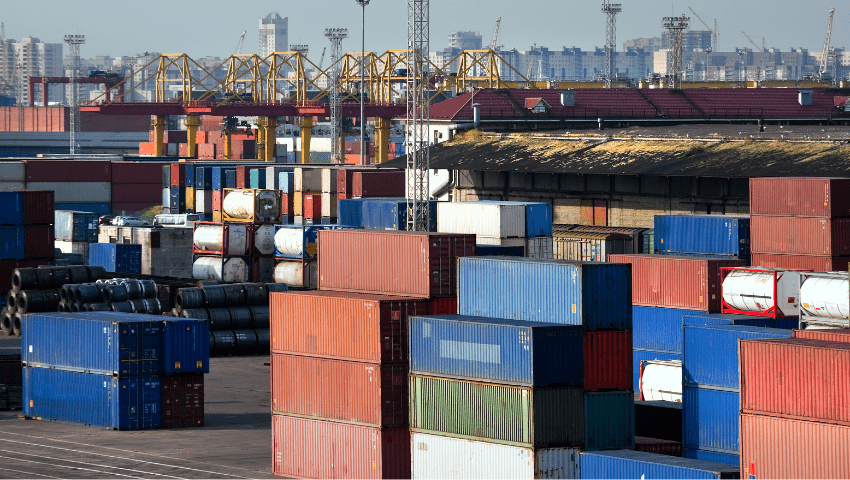
Felixstowe handles around 50% of the UK’s container traffic. No other port comes close.
With capacity exceeding 4 million TEUs, it is the UK’s primary gateway for goods from Asia—electronics, clothing, machinery, furniture. If you bought it online, it probably passed through Felixstowe.
But congestion, labour pressure, and global shipping volatility mean Felixstowe no longer works alone. Shipping lines now actively split calls between Felixstowe, Southampton and London Gateway to manage risk.
Grangemouth: Scotland’s industrial hinge
Grangemouth is not just a port. It’s an ecosystem.
Home to one of Europe’s largest petrochemical complexes, it remains Scotland’s main oil and container hub. It connects Scottish industry directly to North America and mainland Europe.
As the UK transitions away from coal and towards renewables, Grangemouth’s challenge is reinvention—maintaining throughput while adapting to cleaner fuels and circular manufacturing.
Liverpool: the Atlantic gateway
Liverpool’s strength is geography.
Facing west, it is the UK’s most direct major port for trade with Ireland and North America. Dry bulk cargo, recyclables, agricultural products and energy supplies dominate its flows.
For businesses trading beyond Europe, Liverpool often cuts days—and costs—off supply chains.
London Thamesport: smaller, sharper, still relevant
Once written off, London Thamesport has quietly repositioned itself.
Located on the Isle of Grain, 56km east of central London, it now focuses on short-sea container services, bulk cargo, and low-carbon construction logistics. It handles around 500,000 containers per year—not massive, but targeted.
In a world where resilience matters more than scale, that focus is its advantage.
Southampton: the balanced operator
Southampton doesn’t dominate any single category.
That’s precisely why it matters.
As the UK’s second-largest container port and a major hub for vehicles, cruise ships, and bulk cargo, Southampton absorbs overflow when other ports strain. Its deep-water terminals and strong rail links make it the system’s pressure valve.
So what does this actually mean?
UK trading ports are no longer interchangeable.
Each one now plays a specialised role in a tighter, risk-aware network. When one fails, prices rise. When one adapts, the economy breathes.
The next disruption—energy, geopolitics, climate—won’t ask for permission.
And when it arrives, the ports that survive won’t be the oldest or the biggest.
They’ll be the ones that understood the map before everyone else did.