
Jersey Black Butter: Why This ‘Apple Jam’ Is Actually a Living Ritual (2026 Guide)
On a cold Jersey evening, the air fills with the scent of apples, spice, and hours of patient stirring. Someone takes a turn at the paddle. Stories are told. Time slows. What’s bubbling in the pot isn’t just food—it’s a shared moment that has outlived generations.
Called Jersey Black Butter, this dark spread carries far more than sweetness. To understand why it endures, you have to look beyond the jar and into the ritual that keeps it alive.
Jersey Black Butter – known locally as Lé Nièr Beurre – isn’t really about apples, spices, or even flavour. It’s about time. Community. And a tradition that still forces people to slow down in a world that no longer knows how.
This is not a recipe you rush. Historically, it couldn’t be rushed. And in 2026, that may be exactly why it matters more than ever.
The Thing Everyone Gets Wrong About Jersey Black Butter
At first glance, Jersey Black Butter looks like apple jam’s moodier cousin.
But calling it a spread misses the point.
For centuries, this was Jersey’s answer to a brutal, practical question: what do you do when you have too many apples and winter is coming?
The solution wasn’t efficiency. It was endurance.
Fresh cider was boiled down for hours – sometimes more than a full day – before apples, sugar, lemons, liquorice, and spices were added. The mixture had to be stirred constantly. Stop, and it burns. Walk away, and it’s ruined.
Which meant no one could do it alone.
Black Butter Nights: When Cooking Became a Social Contract
This is where Jersey Black Butter quietly becomes something else.
Traditionally, families and neighbours gathered for what’s known as a Black Butter Night (la séthée d’nièr beurre). Apples were peeled in shifts. Cider reduced in huge copper pans. Singing, storytelling, and gossip filled the gaps between stirring.
The pot stayed on the fire through the night. So did the people.
In modern Jersey, this isn’t folklore. It still happens.
The National Trust for Jersey continues the tradition every autumn at The Elms, La Chève Rue, St Mary, Jersey JE3 3EN. In 2025, the Black Butter Festival ran from 2–4 October, with apple peeling, overnight stirring, and a free-entry market day. The 2026 dates are typically announced in late summer – visitors should check the official site at nationaltrust.je for confirmed timings.
It’s free to attend. Donations are encouraged. And yes, you can still take a turn at the paddle.
What Actually Goes Into Jersey Black Butter
The ingredient list is short. The process is not.
- Cider apples – Traditionally local, often sharp rather than sweet
- Fresh cider – Reduced first to concentrate sugars
- Sugar – Added later, once the apples break down
- Lemons – For acidity and balance
- Spices – Typically cinnamon, cloves, nutmeg, and allspice
- Liquorice – The note that surprises first-time tasters
After 24–30 hours of slow cooking and constant stirring, the colour deepens to near-black. The texture turns silky. The flavour becomes something closer to molasses than jam.
Locals often describe it as “Christmas in a jar”.
How Jersey Black Butter Is Used Today
Despite its history, Jersey Black Butter isn’t locked in the past.
In 2026, you’ll still find it:
- Spread on toast, crumpets, and Jersey buttered bread
- Served alongside strong cheeses on cheeseboards
- Used as a glaze for pork, ham, or root vegetables
- Swirled into puddings, tarts, and winter desserts
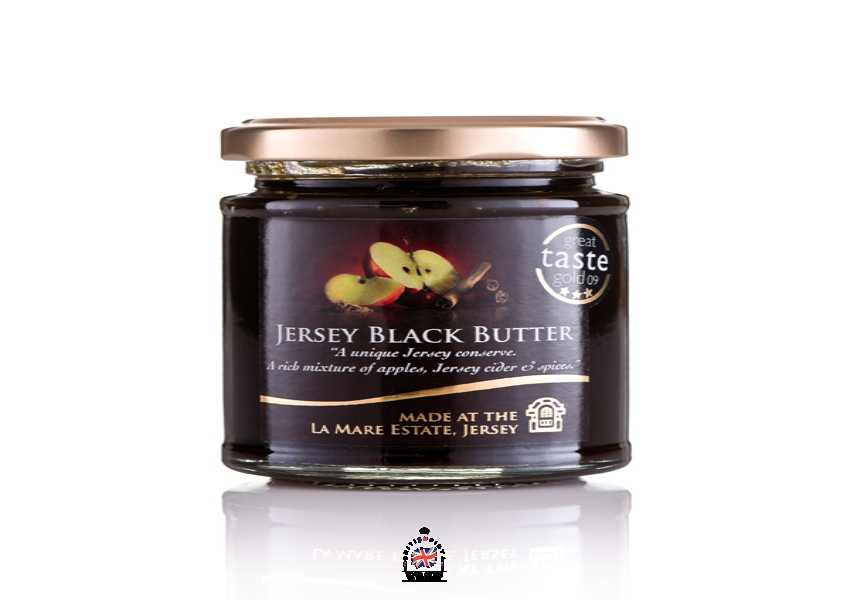
Artisan producers such as La Mare Wine Estate and Maison de Jersey sell jars year‑round. Prices vary by batch and size, but small jars typically sit in the £5–£8 range. For current pricing and availability, always check the producer’s official website.
Making It Yourself: Why Few People Still Do
You can make Jersey Black Butter at home.
But here’s the part most recipes skip: you’ll need a full day, absolute attention, and help.
- Reduce fresh cider by at least half over low heat
- Add chopped apples and cook slowly until broken down
- Stir constantly to prevent burning
- Add sugar, lemon, spices, and liquorice near the end
- Cook until the mixture clings to a wooden spoon
This is why the tradition survived as a group activity. Alone, it’s exhausting. Together, it becomes a night to remember.
Why Jersey Black Butter Still Matters in 2026
In a world of next‑day delivery and five‑minute recipes, Jersey Black Butter quietly refuses to cooperate.
You can’t automate it. You can’t rush it. You can’t do it without people.
That’s why it has survived when so many regional food traditions haven’t. It preserves more than apples. It preserves a way of being together.
From Jar to Memory
If you opened this expecting a guide to a sweet spread, you end somewhere else entirely.
Jersey Black Butter isn’t special because it tastes good – though it does. It’s special because it forces time to stretch, people to gather, and tradition to stay alive.
Once you know that, every spoonful carries a little more weight.