The Industrial Revolution in the UK: What Really Changed Britain (2026 Guide)
Britain didn’t just modernise in the Industrial Revolution—it was rebuilt under pressure. In a few explosive decades, power shifted from fields to factories, towns swelled into cities, and work, wealth, and time itself were redefined.
The changes reached far beyond machines and mills, shaping politics, class, and daily life in ways still felt today. To understand what really changed Britain, it starts with how this transformation unfolded.
That story is comforting. And incomplete.
The truth is harder to ignore: the Industrial Revolution in the UK is still shaping how you work, commute, spend money, and even how your city is laid out in 2026. Once you see it, you can’t unsee it.
About the Industrial Revolution in the UK
The Industrial Revolution in Britain began gradually in the mid‑18th century (around the 1760s) and accelerated into the early 19th century. It wasn’t a single event. It was a chain reaction.
Britain shifted from an economy built on agriculture and manual labour to one powered by machines, factories, and fossil fuel energy. Production moved indoors. Work moved to cities. Time itself became measured by clocks, not daylight.
According to Encyclopaedia Britannica and the BBC, this transformation started in Britain first because of a rare combination: accessible coal and iron, political stability, a growing financial system, and a culture that rewarded invention and investment.
Coal from regions like South Wales and Northern England fuelled furnaces and steam engines. Iron became cheaper and stronger. Textiles—especially cotton—exploded into mass production. By 1800, Britain was producing goods at a scale the world had never seen.
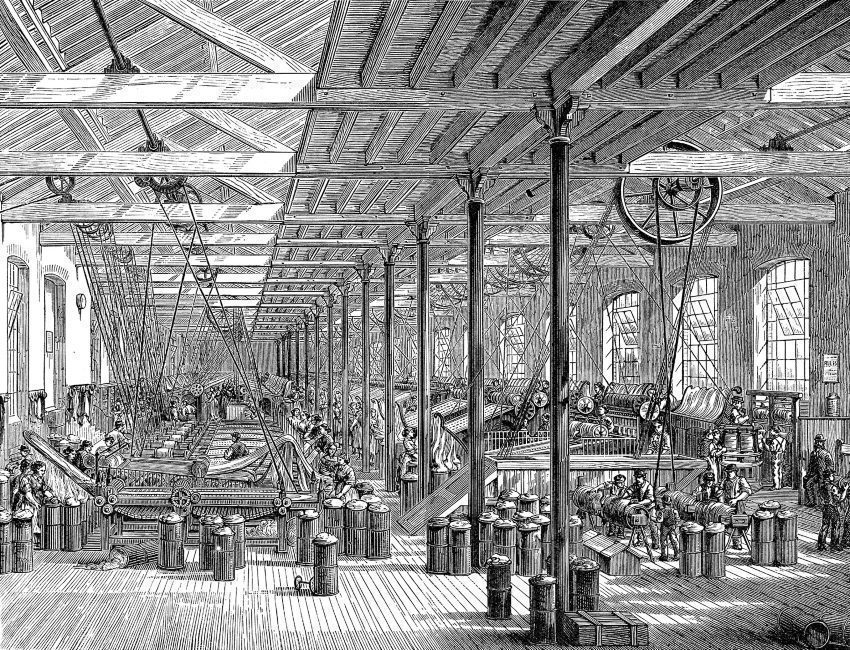
The Hidden Engine: Why Steam Changed Everything
Most people credit factories for the Industrial Revolution.
They’re wrong.
The real breakthrough was energy independence. Before steam, factories had to sit next to rivers. Water froze. Rivers dried up. Growth stalled.
When James Watt dramatically improved the steam engine in the 1770s, something radical happened: power could be generated anywhere. Factories moved closer to workers. Cities grew upward and outward. Railways followed.
By 1800, Britain was producing roughly 80% of Europe’s coal. Steam engines pumped mines dry, powered looms, and later pulled trains. The feedback loop was brutal and efficient: more coal enabled more machines, which extracted even more coal.
The Revolution’s Social Shockwave
The Industrial Revolution didn’t just change how things were made. It changed who people were.
Between 1801 and 1851, Britain’s urban population more than doubled. Cities like Manchester, Birmingham, and Leeds transformed from market towns into industrial powerhouses.
This migration created something new: the industrial middle class. Engineers, managers, merchants, accountants. People who didn’t own land—but controlled machines.
With disposable income came new habits. Paid entertainment. Department stores. Newspapers. Political movements. Trade unions formed in response to dangerous factory conditions and 12‑ to 16‑hour workdays.
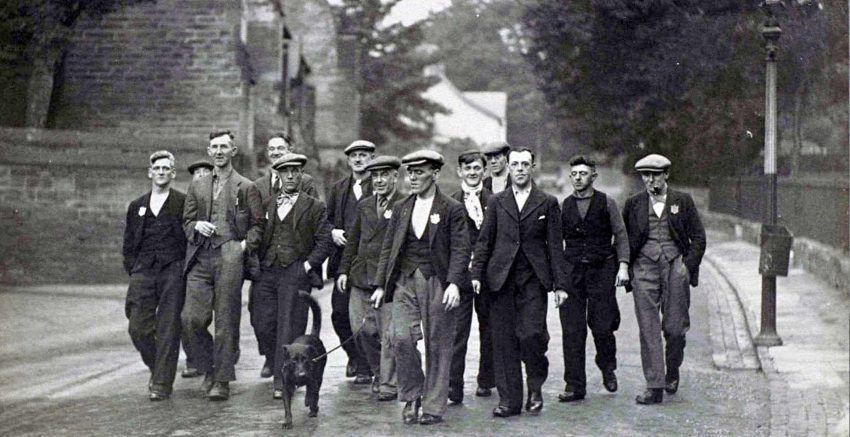
Urban Britain: Built by Industry
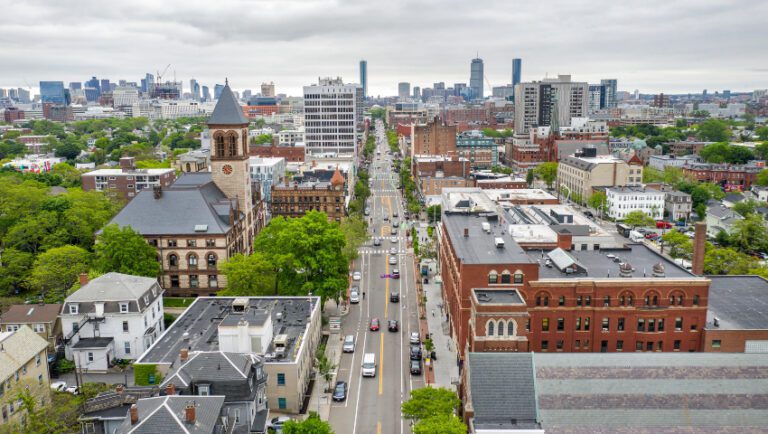
Look at a modern British city map.
Rail lines cutting through neighbourhoods. Terraced housing near old factory districts. Canals running behind warehouses now turned into flats.
None of this is accidental.
The Industrial Revolution forced Britain to invent urban infrastructure at speed: railways, public transport, sewage systems, hospitals, and mass education. By the mid‑19th century, railway track in Britain stretched over 15,000 km, fundamentally shrinking travel time across the country.
These systems still underpin daily life in 2026. The commuter rail corridors into London. The industrial docks turned residential. The idea that the state should provide public health and schooling—all emerged as solutions to industrial urban density.
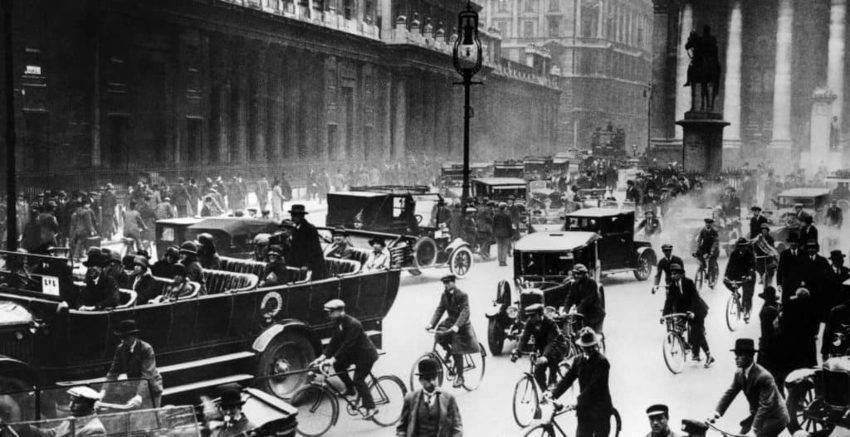
The Cost No One Talks About
Progress came at a price.
Factories polluted rivers. Coal darkened skies. Life expectancy in industrial cities was often 10–15 years lower than in rural areas during the early 1800s.
Children worked in mills. Accidents were common. Environmental damage accumulated quietly.
What’s often missed is this: modern environmental law exists because of the Industrial Revolution. Britain’s first pollution controls, factory acts, and workplace safety rules were direct reactions to industrial excess.
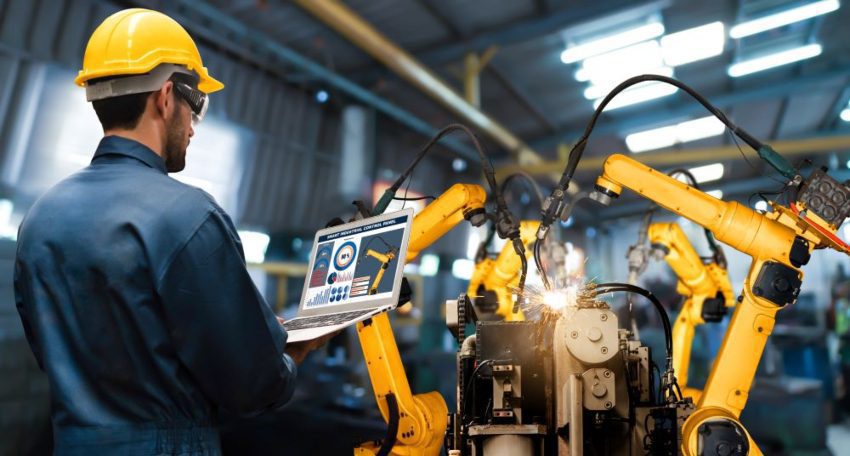
Why the Industrial Revolution Still Matters in 2026
This isn’t nostalgia. It’s relevance.
The debates Britain faces today—automation, energy transition, regional inequality, urban housing pressure—are echoes of the first Industrial Revolution.
Replace steam engines with AI. Coal with data centres. Textile mills with logistics hubs.
The pattern is the same: new technology reshapes work faster than society can adapt. Understanding how Britain navigated that first shock is the closest thing we have to a manual.
Conclusion: The Past Under Your Feet
The Industrial Revolution in the UK isn’t finished. It’s layered.
Every railway commute, converted warehouse, labour law, and environmental regulation traces back to that moment Britain chose machines over muscle.
Once you see the Industrial Revolution not as history—but as infrastructure—you stop asking what changed Britain.
You start asking what Britain is changing into next.
Public Transportation in London: Buses, Taxis, Trams and More (2026)
London’s transport system exists because the Industrial Revolution made mass movement necessary. Explore how it works today in our updated 2026 guide.