Oxford University Museum of Natural History: The Complete Insider Guide (2026)
I’ll admit it: I went in expecting a quick hit of dinosaurs and a polite lap around the galleries. Instead, the building grabbed me by the lapels. Within minutes, I was standing under iron arches and glass, feeling history press in from every direction.
This place isn’t just a museum; it’s where scientific egos collided, ideas evolved, and extinction became uncomfortably real. Once you know where to look—and how to walk it—the Oxford University Museum of Natural History changes completely.
This isn’t just another free museum in Oxford. It’s a living archive of how humans learned to understand life on Earth — and why that understanding still matters in 2026.
Oxford University Museum of Natural History: Not What You Think
The assumption is simple: fossils, glass cases, quiet halls.
The reality is sharper. This is where Charles Darwin’s theory of evolution was publicly torn apart in 1860. Where extinction stopped being abstract. Where science stepped into public view.
Founded in 1860 and still actively used for research today, the museum holds over 5 million specimens spanning zoology, geology, palaeontology, and mineralogy. And yes — entry is still completely free in 2026.
The Dodo, Dinosaurs, and the Cost of Disappearing
The museum’s most famous resident isn’t a dinosaur. It’s the dodo.
Oxford holds the only surviving soft tissue remains of a dodo anywhere in the world. Not a replica. Not a reconstruction. The real thing.
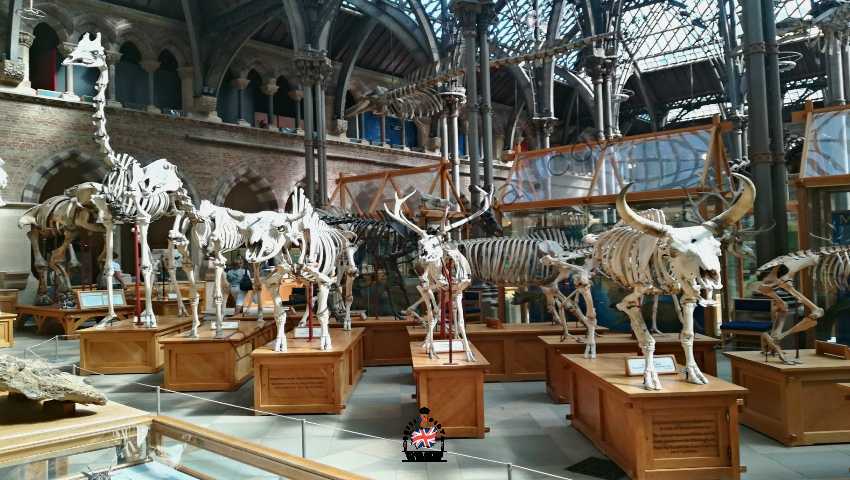
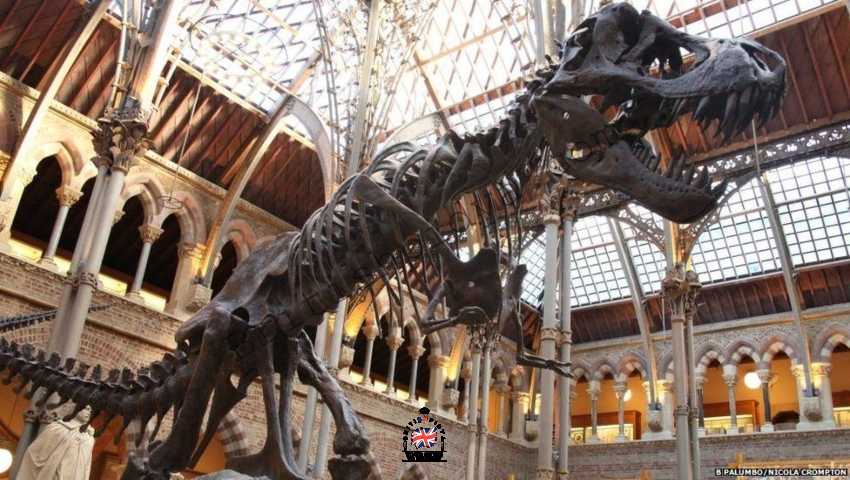
Nearby, towering dinosaur skeletons stretch across the main court — including specimens discovered in Oxfordshire itself. Together, they tell a blunt story: extinction is not rare, and it is not ancient history.
Minerals, Meteorites, and Earth’s Hidden Timeline
Step into the mineral galleries and the timescale shifts again. Here you’ll find glittering gemstones, volcanic rocks, and meteorites older than Earth itself.
It’s geology made physical — proof that the planet beneath Oxford has been moving, colliding, and reforming for billions of years.
The Building Is the First Exhibit
Before you look at a single fossil, look up.
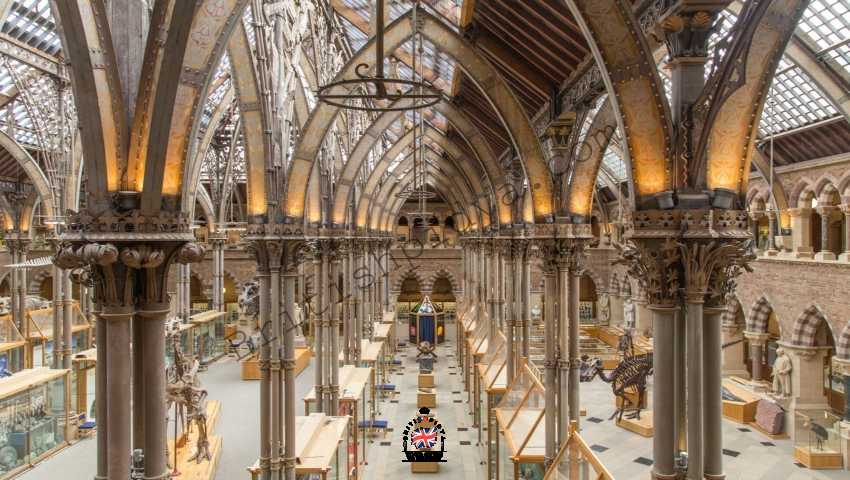
The neo-Gothic building — designed by Irish architects Thomas Deane and Benjamin Woodward — was radical for its time. Science, art, and faith are literally carved into the stone.
The Great Glass Roof
The central court is capped by more than 8,500 individual glass panes, flooding the space with natural light. In the 19th century, this was revolutionary — knowledge was no longer hidden in the dark.
126 Columns, 126 Plant Species
The cast-iron columns aren’t decorative. Each one is topped with stone carvings representing a different plant species from around the world. It’s taxonomy turned into architecture.
Why the Museum Still Matters in 2026
This isn’t a frozen Victorian institution.
In 2026, the museum runs live research programmes, family science sessions, autism-friendly openings, and public lectures tackling biodiversity loss and climate change — using real specimens, not screens.
Hands-On Learning (Especially for Children)
Families aren’t an afterthought here. Expect trail sheets, handling sessions, and workshops designed for children aged 2–16. Learning happens by touching, observing, and asking uncomfortable questions.
A Global Research Hub
Scientists from around the world use the collections to study evolution, extinction, and environmental change. Many of the specimens on display are still actively cited in research papers.
Planning Your Visit in 2026 (What You Actually Need to Know)
Address: Oxford University Museum of Natural History, Parks Road, Oxford, OX1 3PW, United Kingdom
Opening hours: Monday–Sunday, 10:00–17:00 (last entry 16:45). Closed 24–26 December.
Entry fee: Free (£0). Donations welcome.
Phone: +44 (0)1865 272 950
Official website: https://www.oum.ox.ac.uk
When to Go
Weekday mornings are quietest. Weekends bring more families and live activities. Allow 1.5–3 hours for a meaningful visit.
Don’t Miss These
• The dodo remains
• Oxfordshire dinosaur fossils
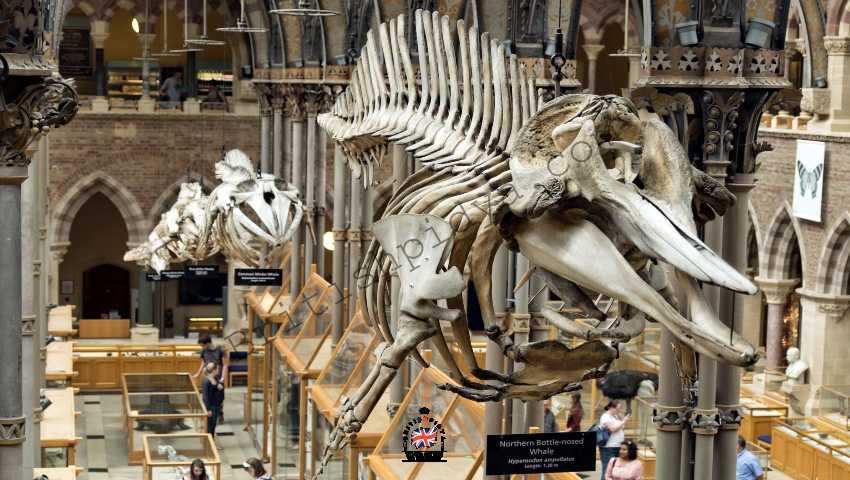
• The whale skeleton
• The mineral gallery
• The original debate location on evolution
What’s Nearby
• Pitt Rivers Museum (connected internally)
• Oxford Botanical Garden (1.4 km)
• Oxford Castle & Prison (2.2 km)
Where to Stay
The Randolph Hotel – 5-star, approx. 800 metres away
Malmaison Oxford – 4-star, approx. 2.3 km away
Why You’ll Leave Changed
You arrive thinking this is a museum about the past.
You leave realising it’s about the future — and your place in it.
In 2026, with extinction accelerating and science under pressure, the Oxford University Museum of Natural History isn’t optional culture. It’s context.