The Gibraltar Flag Explained: Why This Simple Design Still Matters in 2026
In a territory of just 6.7 km² and roughly 34,000 people, one flag carries centuries of data. Adopted in 1982 and rooted in a coat of arms granted in 1502, Gibraltar’s red-and-white banner has flown through sieges, referendums, and modern geopolitics.
When over 98% of voters rejected shared sovereignty in 2002, that simple castle and key became a statistical statement as much as a symbol. Those numbers explain why the design still matters in 2026—and why every detail deserves a closer look.
The Gibraltar flag is a 500‑year‑old political statement that still shapes how this tiny territory sees itself in 2026. It’s not decorative. It’s declarative. And once you understand what you’re looking at, you’ll never see it the same way again.
If you’ve ever wondered why Gibraltar’s flag doesn’t look like other British Overseas Territories — or why a medieval key still hangs from a modern building — you’re in exactly the right place.
This Is Not a British Ensign (And That’s the Point)
Here’s the detail most people miss.
Gibraltar is the only British Overseas Territory whose flag does not include the Union Jack in any form.
That isn’t an accident. It’s a choice.
While most territories use a Blue or Red Ensign with the Union Flag in the canton, Gibraltar flies a banner of arms. In plain terms, it flies its identity first — and its political status second.
This distinction matters even more in 2026, as Gibraltar continues to balance British sovereignty, local self‑government, and its complex relationship with Spain.
The Design Has Barely Changed in 500 Years
The modern Gibraltar flag was officially regularised on 8 November 1982. That date matters, but not for the reason you might expect.
The design itself is far older.
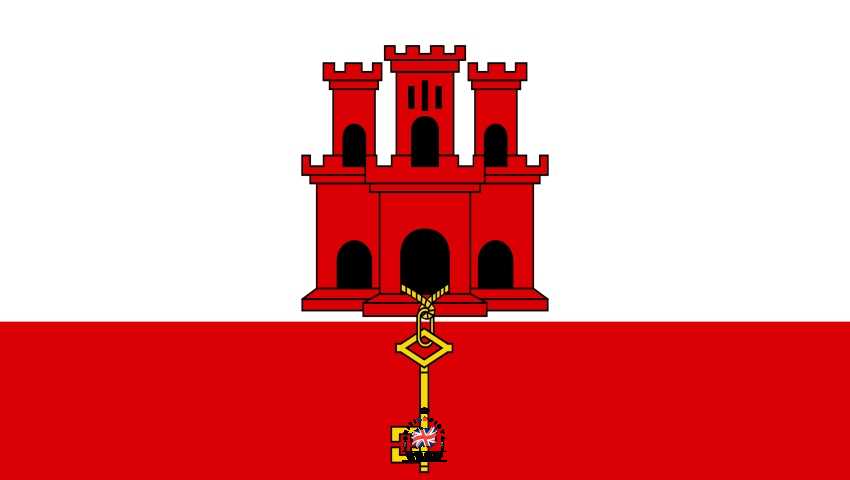
What you see on the flag today is a direct enlargement of Gibraltar’s coat of arms, first granted by Queen Isabella I of Castile on 10 July 1502.
That makes it one of the oldest continuously used civic symbols anywhere in Europe.
- Top two‑thirds: White field
- Bottom third: Red field
- Central symbol: Three‑towered red castle
- Hanging element: A gold key suspended into the red field
- Proportion: 1:2 (longer than it is tall)
This isn’t a modern graphic. It’s medieval heraldry, flying in the open air.
The Castle: Not Moorish, Not Local — And That’s Crucial
Most people assume the castle represents the Rock of Gibraltar or a Moorish fortress.
It doesn’t.
The castle is a Castilian symbol — the same style used in the heraldry of the medieval Kingdom of Castile. Its presence on the flag reflects the moment Gibraltar was absorbed into the Spanish Crown in the early 16th century.
In other words, the castle marks Gibraltar’s importance before British rule, not after.
That historical layering is part of what makes the flag so powerful: it acknowledges the past without being trapped by it.
The Key: A Warning Disguised as a Symbol
The key is the most important part of the flag — and the most misunderstood.
It doesn’t simply mean “gateway to the Mediterranean”.
When the coat of arms was granted in 1502, official documents described Gibraltar as:
“The key between the Eastern and Western Seas.”
The message was blunt: control Gibraltar, and you control naval access between the Atlantic and the Mediterranean.
That logic still holds in 2026. Around 110,000 ships transit the Strait of Gibraltar each year, carrying energy, food, and military traffic between continents.
The key isn’t decorative. It’s strategic.
Why the Colours Still Matter in 2026
Red and white weren’t chosen for aesthetics.
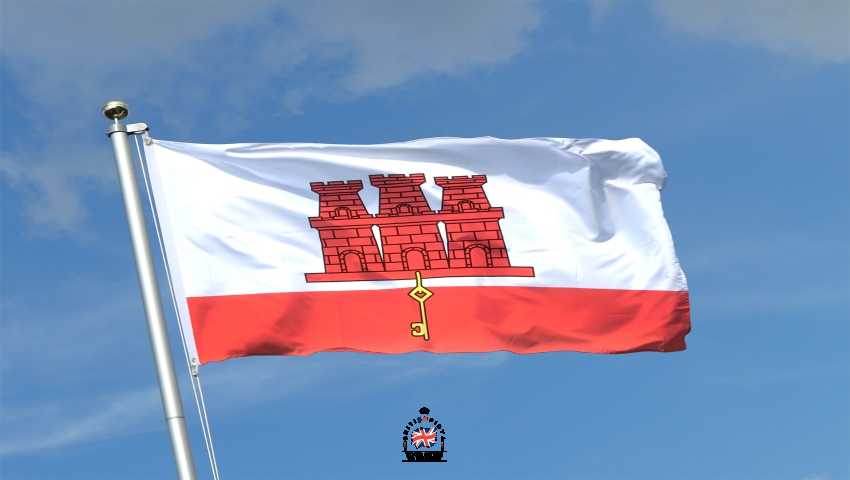
Historically, they reflect Castilian heraldic colours. Over time, they’ve taken on additional meaning locally:
- Red: endurance, resilience, and sacrifice
- White: peace, continuity, and civic unity
Today, the colours are inseparable from Gibraltarian identity. On Gibraltar National Day (10 September), entire streets are flooded with red and white — not as decoration, but as declaration.
How the Flag Is Used (And Where You’ll See It)
In everyday life, the Gibraltar flag appears in places visitors often overlook:
- The land border with Spain at Winston Churchill Avenue
- Parliament Building, Main Street, Gibraltar GX11 1AA
- Government offices and schools
- Private balconies during national events
It’s commonly flown alongside the Union Flag — but just as often, it stands alone.
Frequently Asked Questions About the Gibraltar Flag
Is the Gibraltar flag British or Spanish?
Neither — and both, historically. It’s based on a Spanish‑granted coat of arms but used today as the national symbol of a British Overseas Territory.
Why doesn’t it include the Union Jack?
Because Gibraltar chose to fly its historic arms rather than a British ensign. It’s a statement of identity, not a rejection of sovereignty.
When was the current flag adopted?
The modern flag was regularised on 8 November 1982, though its design dates back to 1502.
Why This Flag Still Matters
At first glance, the Gibraltar flag looks simple.
By the time you understand it, you realise it’s anything but.
It’s a reminder that geography creates power, that history leaves fingerprints, and that identity doesn’t need constant reinvention to remain relevant.
The next time you see that castle and key, you won’t just see a flag.
You’ll see a lock — and the hand that still holds it.
Gibraltar Airport: A Practical Guide for Visitors in 2026
Learn how Gibraltar’s unique airport operates, why the runway crosses the main road, and what travellers need to know before arriving.