
UK Ministry of Health Explained: Who Really Runs Healthcare in 2026
I’ll admit it: for years I treated the UK Ministry of Health as a distant label—something vague that sat above the NHS and signed off budgets. That shortcut was wrong, and in 2026 it’s more misleading than ever.
The real power is messier, more political, and far more hands-on than the name suggests. To understand who actually runs healthcare in the UK, you have to look past the logo and follow the decisions.
In 2026, the Department of Health and Social Care quietly controls decisions that affect how fast you see a GP, how long NHS waiting lists are, which medicines are approved, how social care is funded, and even what health data is collected about you.
This guide explains what the UK Ministry of Health actually does, who leads it in 2026, how its powers work, and why understanding it matters more than most people realise.
What Is the UK Ministry of Health in 2026?
The United Kingdom does not officially use the name “Ministry of Health” anymore.
The modern equivalent is the Department of Health and Social Care (DHSC). It is a central government department responsible for health and adult social care policy in England.
Founded originally in 1919 as the Ministry of Health, it evolved into the DHSC in 2018 to formally include social care alongside healthcare.
In 2026, the DHSC supports ministers in delivering the government’s 10 Year Health Plan for England, managing NHS reform, regulating medicines, and funding adult social care.
Who Is in Charge of the UK Ministry of Health?
The head of the UK Ministry of Health is the Secretary of State for Health and Social Care.
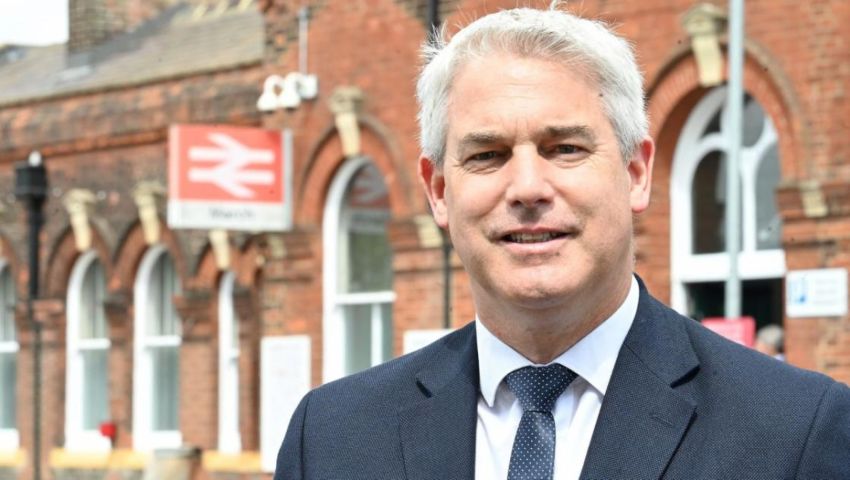
As of January 2026, the role is held by The Rt Hon Wes Streeting MP, who was appointed on 5 July 2024.
This position is one of the most powerful in the UK Cabinet. The Health Secretary has overall political responsibility for:
- NHS performance and funding in England
- Public health policy and prevention
- Adult social care reform
- Medicines, medical devices, and regulation
- Health data and digital systems
What the Ministry of Health Actually Controls (And What It Doesn’t)
This is where most people get it wrong.
The DHSC does not run hospitals day-to-day. That responsibility sits with NHS England and local NHS trusts.
What the Ministry does control is the system around the system.
In practical terms, the UK Ministry of Health:
- Sets national health and social care policy
- Controls multi‑billion‑pound funding allocations
- Drafts health legislation passed by Parliament
- Oversees regulators like the CQC and MHRA
- Responds to national health emergencies
If NHS England is the engine, the Ministry of Health is the steering wheel.
Core Objectives of the UK Ministry of Health
In 2026, the DHSC’s core mission is simple on paper and complex in reality: help people live longer, healthier lives while keeping the system financially sustainable.
Its main objectives include:
- Reducing NHS waiting lists and treatment delays
- Tackling health inequalities across regions and communities
- Improving mental health and neurodiversity services
- Strengthening adult social care and workforce capacity
- Preventing illness through early intervention
These goals shape everything from GP access targets to national vaccination programmes.
UK Ministry of Health Agencies in 2026
The Department of Health and Social Care is supported by over 20 agencies and public bodies. Some of the most important in 2026 include:
Key executive agencies
- Medicines and Healthcare products Regulatory Agency (MHRA)
- UK Health Security Agency (UKHSA)
Major public bodies
- Care Quality Commission (CQC)
- NHS England (now incorporating NHS Digital and Health Education England)
- National Institute for Health and Care Excellence (NICE)
- Health Research Authority
This consolidation means fewer organisations — but far more centralised control.
Legal Status and Powers of the Ministry of Health
The UK Ministry of Health is a ministerial government department.
Its authority comes from Acts of Parliament such as the National Health Service Act and secondary legislation made under those laws.
This allows the DHSC to:
- Issue binding regulations
- Delegate powers during public health emergencies
- Direct NHS England through formal mandates
In short: it doesn’t just advise — it instructs.
How to Contact the UK Ministry of Health
Official contact details (2026):
Address:
39 Victoria Street
Westminster
London
SW1H 0EU
United Kingdom
Telephone: 0300 790 4007
Email: dhsc.publicenquiries@dhsc.gov.uk
Official website: https://www.gov.uk/government/organisations/department-of-health-and-social-care
Jobs at the UK Ministry of Health
Careers at the DHSC are part of the UK Civil Service.
Most roles are policy‑focused and based in London, with salaries aligned to Civil Service pay bands.
To apply:
- Visit the Civil Service Jobs portal
- Search for “Department of Health and Social Care”
- Apply online with a competency‑based application
Why the UK Ministry of Health Matters More Than You Think
At the start, this looked like an article about a government department.
But what you’ve actually been reading is a map of power.
The UK Ministry of Health doesn’t just respond to health problems. It decides which problems matter, which solutions get funded, and how the future of healthcare will look.
Once you see that, you don’t just “use” the NHS anymore.
You understand who shapes it.