How Immigration Quietly Rewrote British Culture (Updated for 2026)
What if the biggest changes to British life didn’t arrive with headlines or statistics? What if they slipped in through food courts, classrooms, offices, and living rooms, reshaping habits, humour, and everyday norms?
Beyond the numbers, what has immigration actually changed about how Britain lives, works, and sees itself—and why have so many of those shifts gone largely unnoticed?
That assumption misses the real story.
Immigration didn’t just change who lives in the UK. It quietly rewired how Britain eats, listens, laughs, speaks, and even argues. And by 2026, the data shows something unexpected: while migration numbers have fallen sharply, the cultural impact has never been more deeply embedded.
What the 2026 Numbers Actually Say (And What They Don’t)
Let’s start with the uncomfortable fact most headlines skip.
According to the Office for National Statistics, net migration to the UK fell to around 204,000 in the year ending June 2025 — a 69% drop from the previous year. That’s a dramatic decline by any historical measure.
Many people read that and assume immigration is “slowing down.”
What’s actually happening is more interesting: Britain is shifting from mass arrival to long-term imprint. Fewer people are coming — but those already here are shaping culture in permanent, structural ways.
Cuisine, music, television, language, humour, and even everyday habits now reflect decades of migration. These don’t reverse when visa rules tighten.
British Culture Was Never Static — We Just Pretended It Was
There’s a popular myth that Britain had a fixed, clearly defined culture until immigration arrived to “change” it.
History disagrees.
Black communities existed in British port cities like Liverpool and Bristol as early as the 18th century. After the abolition of slavery in 1833, these communities became a visible part of British society — long before modern immigration debates existed.
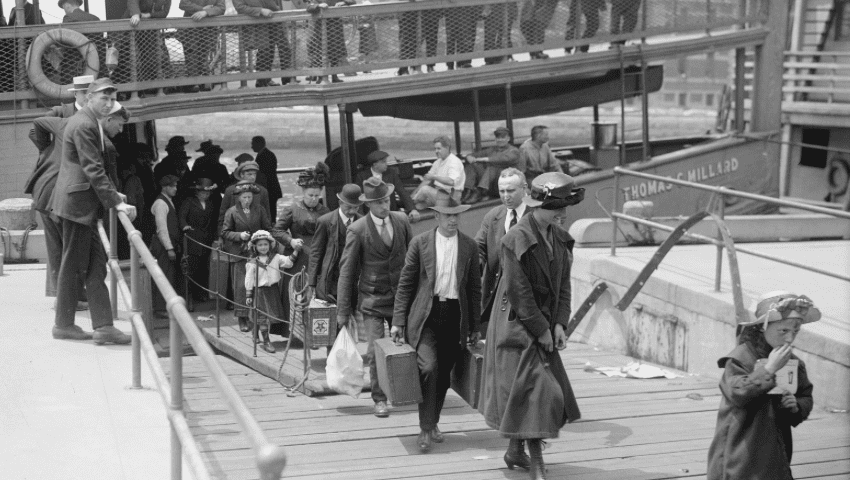
The real acceleration came after World War II, when Britain faced an urgent labour shortage. The 1948 British Nationality Act allowed citizens of the Commonwealth to live and work in the UK. On 22 June 1948, the Empire Windrush docked in London, carrying hundreds of Caribbean passengers.
That moment didn’t just fill jobs. It changed Britain’s cultural direction.
Music: From Imported Sounds to British Identity
British music didn’t absorb migrant influence politely. It collided with it.
In the 1950s and 1960s, Caribbean migrants brought calypso, jazz, gospel, and blues to a country dominated by swing bands. By the 1970s and 1980s, Jamaican sound system culture had fused with British urban life.
The result?
Genres now considered unmistakably British — jungle, drum and bass, garage, grime and dubstep — all trace their roots to migration. Entire global scenes emerged from council estates, pirate radio stations, and second-generation communities.
By 2026, the children and grandchildren of the Windrush generation dominate British urban music. This isn’t influence anymore. It’s ownership.
Food: The Most Honest Measure of Cultural Change
You can argue about politics. You can’t argue with your dinner plate.
In 2026, over half of UK households cook international dishes every week. Chicken tikka masala, once a novelty, is now routinely called Britain’s unofficial national dish.
Doner kebabs, jollof rice, pierogi, ramen, pho, and samosas aren’t “ethnic food” anymore. They’re just food.
What’s more revealing is where this happens. Towns with little historic diversity now have Polish bakeries, Bangladeshi takeaways, Nigerian cafés, and Turkish barbers — often revitalising high streets abandoned by chain retailers.
Culture doesn’t integrate through speeches. It integrates through appetite.
Family, Identity, and Quiet Cultural Blending
British family structures are also changing — not through replacement, but blending.
Multigenerational households, once considered unusual in Britain, are increasingly common among families with South Asian, African, and Eastern European backgrounds. These patterns are now influencing housing design, childcare norms, and work-life expectations.
At the same time, traditional British traits — emotional restraint, understatement, self-deprecating humour — haven’t disappeared. They’ve adapted.
The result is a culture that can hold contradiction: politeness and protest, reserve and expression, tradition and reinvention.
Arts, Television, and Who Gets to Represent Britain
In 2014, British director Steve McQueen won the Academy Award for Best Picture. In 2012, Anish Kapoor designed a permanent landmark for London’s Olympic Park. In 2015, Nadiya Hussain won The Great British Bake Off and redefined what a “British” winner looked like.
By 2026, these moments no longer feel exceptional.
British television, film, and art now routinely reflect the country as it actually is — not as nostalgia remembers it.
The Tension Britain Hasn’t Resolved Yet
Here’s the paradox.
Britain enjoys the cultural output of immigration every day — the music, the food, the creativity, the global relevance.
But politically, immigration remains framed as a problem to manage rather than a force already woven into national life.
Net migration may rise or fall. Visa rules may tighten or loosen. But culture doesn’t move backwards on command.
The Britain of 2026 is not becoming multicultural.
It already is.
Why This Story Matters More Than the Headlines
If you only track immigration through statistics, you miss the deeper truth.
The real impact of immigration isn’t measured at the border. It’s measured in what Britain now considers normal — what it eats on a Tuesday night, what plays on the radio, who children see on television, and how the country understands itself.
That transformation didn’t arrive loudly.
It arrived, stayed, and became British.