University College London (UCL): The 2026 Insider’s Guide to Studying in London
At the edge of Bloomsbury, behind ordinary streets and famous façades, University College London hides a quieter story—one written in late-night libraries, radical ideas, and doors few students realize are even there.
This isn’t a brochure version of UCL. It’s the one you uncover by paying attention. To understand what studying here is really like in 2026, we need to start beneath the surface.
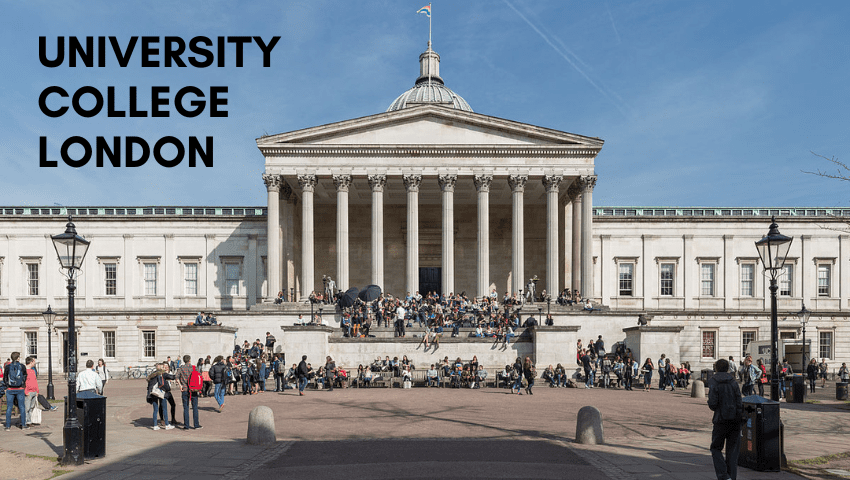
UCL is something rarer: a university that quietly shapes modern Britain and the wider world, while sitting in plain sight on Gower Street. In 2026, it remains one of the few institutions where academic prestige, real-world impact and London life genuinely collide.
University College London in 2026: Why It Still Matters
Founded in 1826, UCL was built to challenge the rules. It admitted students regardless of religion when that was controversial. It educated women before most universities even considered it. And in 2026, it continues that tradition by focusing on global problems, not just academic prestige.
Today, UCL has around 39,000 students from over 150 countries, supported by more than 11,000 staff. Its official address remains: University College London, Gower Street, London WC1E 6BT.
Global Rankings & Reputation (Updated for 2026)
Rankings don’t tell the full story—but they do confirm one thing: UCL hasn’t slipped.
In the QS World University Rankings 2026, UCL is ranked 9th globally, marking its 14th consecutive year in the world’s top 10. It also ranks 7th worldwide in the U.S. News & World Report Best Global Universities 2025–26.
In the UK, UCL is ranked No.2 for research power (REF 2021) and No.1 in the UK for sustainability according to the QS Sustainability Rankings 2026.
What Can You Study at UCL?
UCL is unapologetically broad. In 2026, it offers 400+ undergraduate and postgraduate programmes across disciplines including:
- Medicine, Life Sciences & Neuroscience
- Engineering, AI & Computer Science
- Architecture & Built Environment (The Bartlett)
- Law, Economics & Public Policy
- Education (ranked No.1 globally)
- Arts, Humanities & Social Sciences
Short courses, CPD modules and flexible postgraduate routes are also available—particularly attractive for working professionals in London.

Tuition Fees at UCL (2025–2026 Academic Year)
Fees vary significantly by programme, but here are realistic ranges for 2026 entry:
| Programme | UK Students | International Students |
|---|---|---|
| Undergraduate | £9,250 per year | £26,200 – £38,000 per year |
| Postgraduate (Taught) | £10,700 – £18,000 | £28,000 – £47,000 |
| MRes / Research Degrees | From £5,860 | Up to £57,700 |
Important: Overseas undergraduate and most postgraduate fees are now fixed at the rate of entry, protecting students from annual increases.
Scholarships & Financial Support (2026)
UCL offers one of the UK’s most generous scholarship ecosystems. Notable 2026 options include:
- UCL Global Undergraduate Scholarship – up to £10,000/year
- UCL Global Masters Scholarship – £15,000
- UCL–GREAT Scholarship 2026 – £10,000 (British Council-backed)
- Humanitarian & Refugee Scholarships – fully funded
- Care Leaver Bursary – £1,000 per year
Deadlines typically fall between January and May 2026. Always check the official scholarships finder for programme-specific funding.

The Real Student Experience at UCL
This is the part rankings can’t measure.
UCL students don’t live on a bubble campus. They live in London. Your library might be the British Library. Your study break could be the British Museum (next door). Your internship could be a 15‑minute Tube ride away.
The Students’ Union UCL supports hundreds of societies, from fintech and debating to cultural and political groups. Buses run past campus every 5–10 minutes, and Tottenham Court Road Station is a 6‑minute walk.
Famous Alumni You Actually Know
UCL alumni include:
- Mahatma Gandhi – Law
- Alexander Graham Bell – Physiology
- Ricky Gervais – Philosophy
- Rabindranath Tagore – Literature
- Chris Martin (Coldplay)

Careers, Impact & Life After UCL
UCL graduates join a global alumni network of 350,000+ across 110 countries. Employers consistently rank UCL in the top 10 globally for employability.
Whether you’re aiming for NHS leadership, global policy, tech startups or doctoral research, the university’s London location quietly does half the work for you.
How to Contact University College London
Email (Admissions): study@ucl.ac.uk
Fees Office: fees@ucl.ac.uk
Phone: +44 (0)20 3108 7284
Official website: https://www.ucl.ac.uk
So, Is UCL Worth It in 2026?
If you think UCL is just about prestige, you’ll miss its real value.
UCL isn’t about hiding from the world for three years. It’s about stepping directly into it—with serious academic backing.