Traditional Clothes of Ireland: What You Think You Know (2026 Guide)
A quick scroll online can still blur the facts about Ireland—its history, its identity, even its wardrobe. From global runways to tourist shops, Irish dress is often flattened into stereotypes that miss what’s really going on.
The truth is sharper, older, and far more political than green costumes and folklore. To understand traditional Irish clothing in 2026, you have to start with history, not myth—so let’s break it down.
Both ideas are wrong.
And once you understand why, Irish traditional clothing stops being about jumpers and fabric—and starts becoming a coded story of survival, identity, and quiet resistance that still shapes how Ireland presents itself to the world in 2026.
First, a Necessary Correction (That Changes Everything)
Ireland is not a single political entity—and it is not fully part of the United Kingdom.
The island of Ireland contains two countries:
- The Republic of Ireland – an independent country since 1949
- Northern Ireland – part of the United Kingdom
This matters because traditional Irish clothing developed largely as an expression of identity outside British rule, especially in rural and coastal communities where culture was preserved through daily life rather than formal institutions. That tension is stitched into the clothes themselves.
Traditional Irish Clothing Isn’t Costume. It’s Code.
Unlike national dress designed for ceremony, Irish traditional clothing evolved from necessity.
Cold Atlantic weather. Wet stone cottages. Fishing before sunrise. Farming on thin soil.
What survived wasn’t decorative—it was functional. And over time, function turned into identity.
The Aran Sweater: The World’s Most Misunderstood Jumper
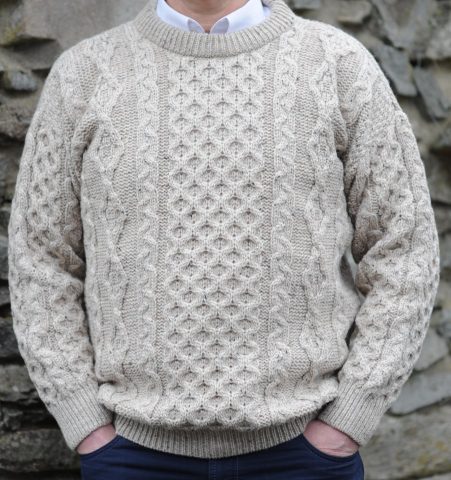
The Aran sweater didn’t start as fashion. It started as survival gear.
Originating on the Aran Islands off the coast of County Galway, these sweaters were hand-knitted from untreated wool rich in lanolin—naturally water-resistant and insulating even when damp.
Each stitch pattern carried meaning:
- Cable stitch – fishermen’s ropes, symbolising safety at sea
- Honeycomb – hard work and reward
- Diamond – the stone fields of the west, representing prosperity
By 2026, authentic Aran sweaters are still made in Ireland—not factories overseas.
Real prices (UK, 2026):
- Traditional merino Aran sweater: £70–£95
- Heavier wool or shawl-collar styles: £110–£150
These prices reflect Irish-made garments from mills such as Aran Woollen Mills and Aran Sweater Market. Cheaper versions usually indicate overseas production.
Irish Tweed: Built for Weather, Not Runways
If Aran knitwear protected fishermen, tweed protected farmers.
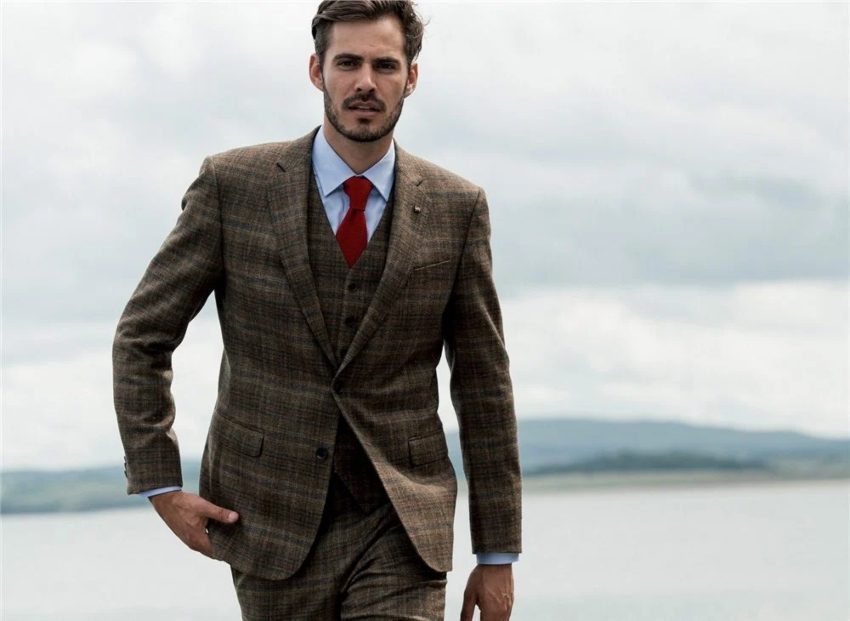
Irish tweed—especially Donegal tweed—is defined by its coloured flecks, inspired by heather, lichen, and stone. Originally woven at home, it became a cornerstone of rural dress in the 19th century.
In 2026, tweed remains common in:
- Flat caps (£30–£50)
- Jackets and blazers (£180–£350)
- Waistcoats and skirts (£90–£160)
Modern Irish designers still use traditional looms, blending heritage with contemporary tailoring.
The Irish Shawl: Quiet Power
The traditional Irish shawl was never just decorative.
Worn by women across rural Ireland, it functioned as warmth, modesty, and storage—fastened with a brooch and often passed through generations.
Today, shawls are most visible in traditional Irish dance and cultural ceremonies, where they act as visual anchors to the past.

Why Music Always Appears Beside the Clothes
Irish traditional clothing rarely stands alone. It appears with music because both evolved from the same places: kitchens, fields, and village halls.
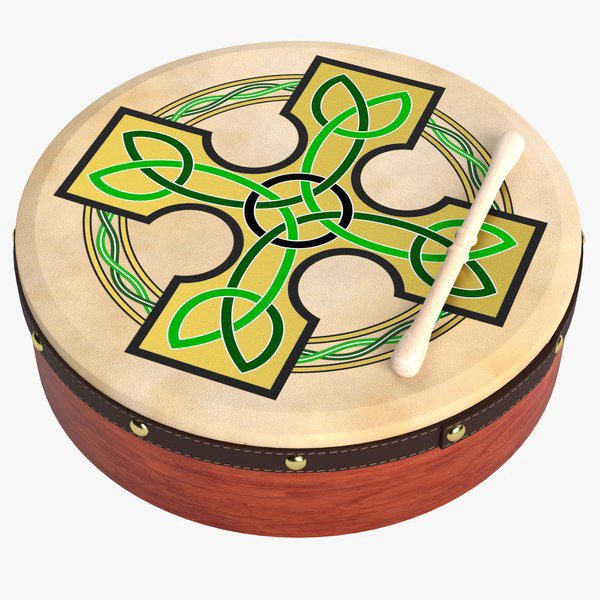
Bodhrán
The bodhrán is a frame drum played with a tipper, forming the rhythmic backbone of Irish traditional music.
Simple in construction, complex in skill, it mirrors Irish clothing: practical, adaptable, and expressive.
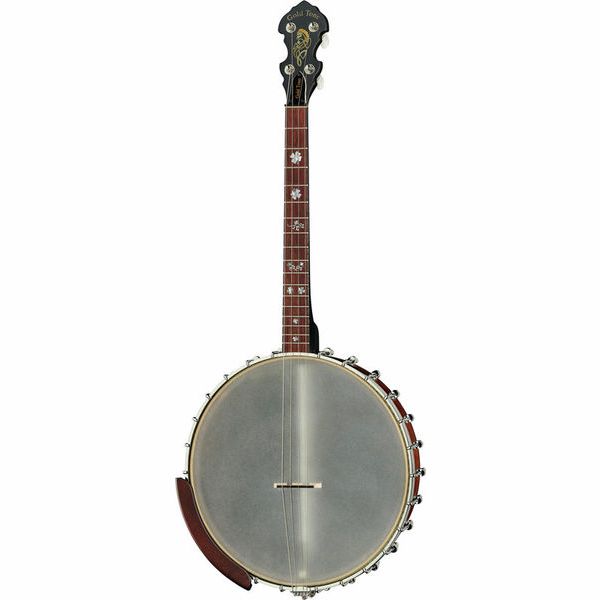
The Irish Banjo
Introduced in the 19th century, the banjo was quickly absorbed into Irish folk traditions—played fast, percussive, and communal.
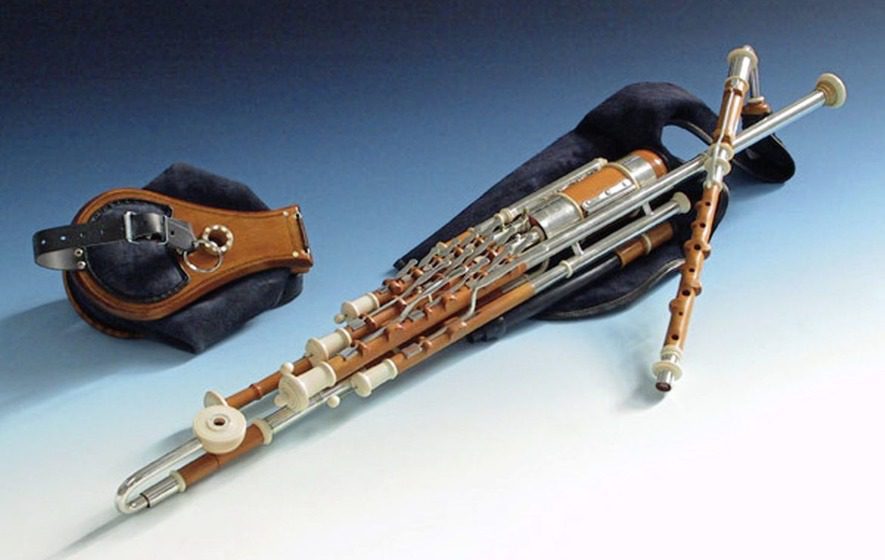
Uilleann Pipes: Not Scottish, Not Loud, Entirely Irish
Often confused with Scottish bagpipes, the uilleann pipes are quieter, played seated, and powered by bellows at the elbow.
They can play two full octaves and were recognised by UNESCO as Intangible Cultural Heritage in 2017—a status still current in 2026.
So What Does This All Mean?
Traditional Irish clothing isn’t about nostalgia.
It’s about continuity.
In 2026, when you see an Aran sweater or tweed cap, you’re not looking at fashion frozen in time. You’re seeing a living language—one that survived colonisation, famine, and modernisation by adapting without forgetting where it came from.
And once you know that, you never see Irish clothing the same way again.