Trains in the UK: The Real 2026 Guide Most Travellers Miss
UK train travel isn’t broken—it’s strategic. Fares, routes, and timing form a game where the rules aren’t advertised, and the winners pay less, travel faster, and avoid the stress entirely.
In 2026, small choices still decide whether a journey feels seamless or wildly overpriced. This guide breaks open how the system actually works, starting with the essentials you need before booking anything.
It isn’t. And once you understand how it really works in 2026, the entire country becomes smaller, faster, and cheaper to explore.
About Trains in the UK
The UK railway network is one of the oldest in the world – and one of the densest. In 2026, it still connects almost every major city in England, Scotland and Wales directly, with London acting as the main hub.
That history matters. The system wasn’t designed for tourists. It was built for commuters, merchants, and industrial Britain – and that’s why it rewards people who understand its logic.
Most large towns have a station. Many small villages do too. The catch? Frequency varies. Some routes run every 15 minutes. Others only a few times a day. Knowing this before you plan can save hours.
Tickets are now overwhelmingly digital. In 2026, eTickets and mobile tickets are standard across most routes, and paper tickets are increasingly the exception rather than the rule.
UK Train Classes Explained
Most UK trains operate with two classes: Standard Class and First Class. There is no second or third tier.
Standard Class is clean, safe, and perfectly comfortable for most journeys. First Class isn’t about luxury – it’s about space, quieter carriages, and sometimes food or lounge access.
Because distances in the UK are relatively short, overnight trains are rare. The main exception is the Caledonian Sleeper between London and Scotland.
Types of Train Tickets in the United Kingdom
This is where most people lose money.
The UK doesn’t sell “a ticket”. It sells rules disguised as tickets. Choose the wrong rule, and you pay more or lose flexibility.
Advance (Pre‑Purchased) Tickets
Advance tickets are usually the cheapest option. In 2026, they are typically released up to 12 weeks before travel.
The trade‑off is rigidity. These tickets are valid only on the specific train booked. Miss it, and the ticket is worthless unless the train is cancelled or delayed.
If your plans are fixed, Advance tickets can cut long‑distance fares dramatically.
Anytime Tickets
Anytime tickets buy freedom. You can travel on almost any train on the chosen date, including peak hours.
They are the most expensive tickets on the network – and the least misunderstood. You’re not paying for speed. You’re paying for optionality.
- Anytime Day Single
- Anytime Day Return
- Anytime Single
- Anytime Return
Off‑Peak and Super Off‑Peak Tickets
Off‑Peak tickets are cheaper because they avoid rush hours, usually weekday mornings and early evenings.
They’re ideal if you want flexibility without paying Anytime prices. The exact restrictions vary by route, which is why checking before travel matters.
Season Tickets and Flexi Season Tickets
For regular commuters, Season Tickets offer unlimited travel between two stations.
The modern twist is the Flexi Season Ticket. In 2026, it allows 8 days of travel within 28 days – perfect for hybrid working.
GroupSave Tickets
GroupSave offers discounts of up to 34% for groups of three to nine adults travelling together on eligible routes.
Tips for Travelling by Train in the UK
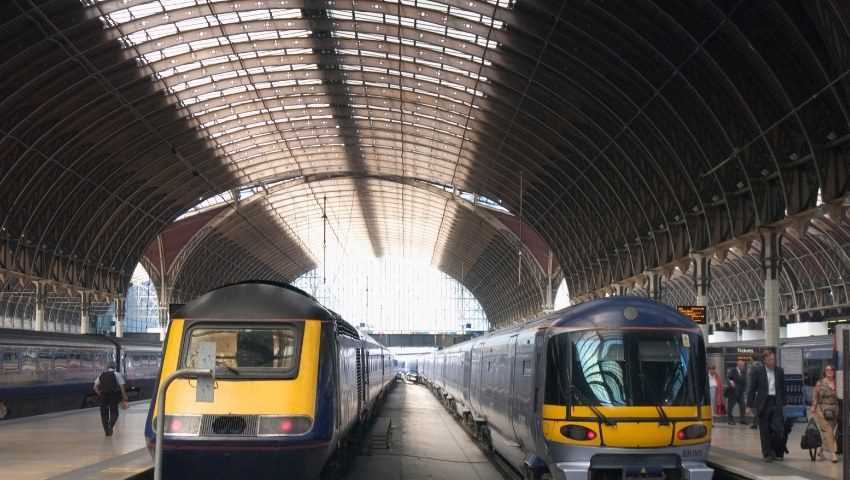
- Seat reservations matter on busy routes – book early if travelling on Fridays or Sundays.
- London to Edinburgh takes around 4.5 hours on modern services.
- First Class carriages are clearly marked – sitting there without a valid ticket can result in a penalty fare.
- Some trains split en route. Always check carriage destination displays.
- On Sundays and public holidays, expect reduced services.
How to Buy Train Tickets in the UK
In 2026, most passengers buy tickets online or via apps.
- Online via the National Rail journey planner
- Mobile apps with eTickets
- Ticket machines at stations
- Manned ticket offices
- On-board (only if facilities were unavailable)
Refunds and Delays
Refund rules depend on ticket type. Advance tickets are usually non‑refundable, while flexible tickets can often be refunded before travel.
For delays, the Delay Repay scheme compensates passengers, often starting from delays of 15 or 30 minutes depending on operator.
Services on UK Trains
- First Class seating
- Wi‑Fi on most intercity services
- Catering on longer routes
- Live journey information
BritRail Pass: Who It’s Really For
The BritRail Pass is designed for non‑UK residents. It offers unlimited travel across England, Scotland and Wales for a set number of days.
It shines when plans are flexible and journeys are frequent. It’s less effective for short, fixed itineraries.
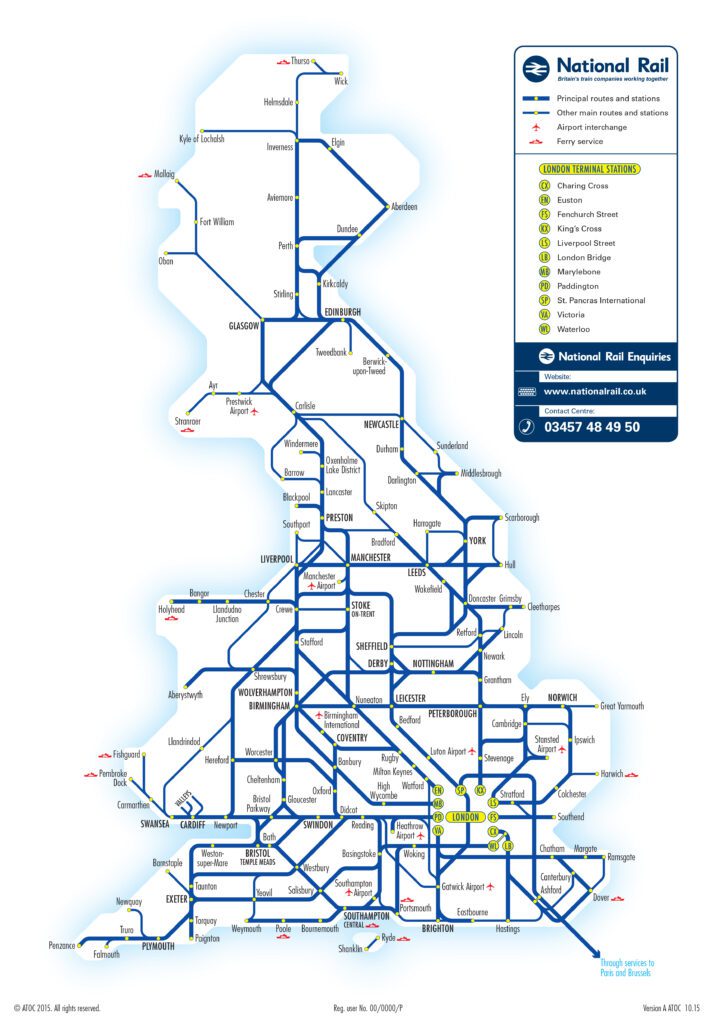
United Kingdom Train Map
The Best Train Ticket App in the UK
In 2026, Trainline remains the most widely used train ticket app in the UK, offering eTickets, live disruption alerts, and split‑ticket savings.
Once you understand the system, the app stops being a convenience – and becomes a weapon.
That’s the real secret of UK train travel. The rails don’t change. You do.