Transportation in Oxford 2026: How the City Actually Moves (and How to Move Smarter)
Oxford’s streets are changing fast in 2026. Traffic filters, expanded bus corridors, e-bikes, and rail upgrades are reshaping how the city moves—sometimes smoothly, sometimes not.
Whether you live, commute,
Oxford looks small. Medieval streets. Colleges packed tightly together. Bicycles everywhere. But in 2026, getting around Oxford efficiently isn’t about walking versus driving. It’s about knowing the hidden rules of movement in a city actively trying to reduce traffic, cap fares, and quietly reward people who plan their transport properly.
This guide shows you how Oxford actually moves in 2026—what works, what costs more than it should, and what most visitors and even residents don’t realise until they’ve already wasted time and money.
Transportation in Oxford: The Big Picture (2026)
Oxford in 2026 is designed to discourage private cars and quietly push people towards buses, cycling, and park-and-ride. Parking in the city centre is limited, expensive, and deliberately inconvenient.
What replaces cars is a layered system:
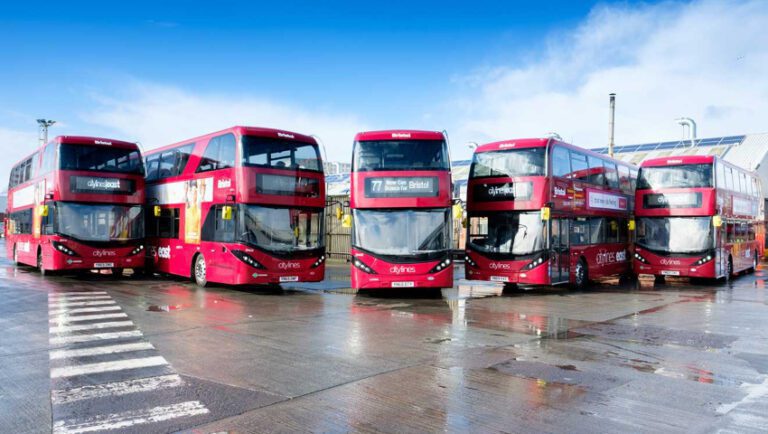
- High-frequency city buses with capped fares
- A 24-hour coach link to London
- National rail connections from a single central station
- Licensed taxis and now Uber operating again
- One of the UK’s strongest everyday cycling cultures
If you understand how these layers fit together, Oxford becomes fast and cheap to navigate. If you don’t, it feels slow and frustrating.
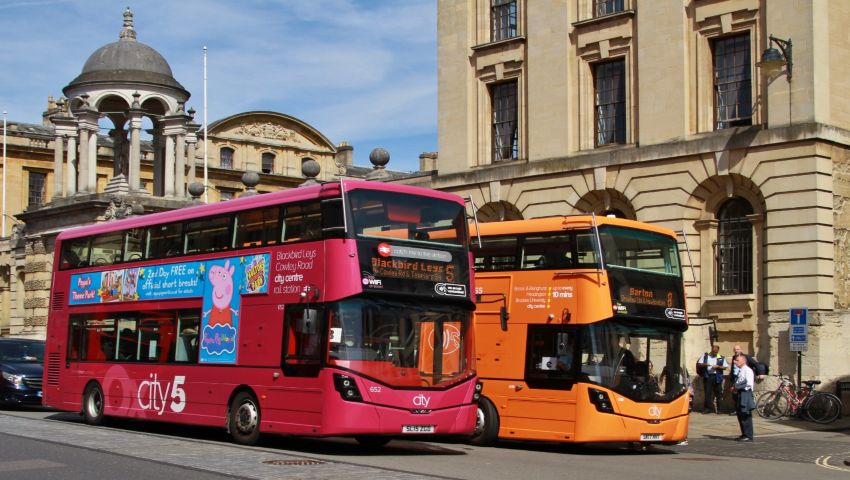
Oxford City Buses (What They Really Cost in 2026)
Three operators dominate Oxford:
- Oxford Bus Company
- Stagecoach Oxfordshire
- Thames Travel
The main bus hub is Gloucester Green Bus Station, located just north of the city centre (Gloucester Green, Oxford OX1 2BU).
Here’s the part most people miss.
Until 31 December 2026, single bus fares in Oxford are capped at £3. Many inner-city journeys cost less.
Key 2026 prices:
- Single fare: £2–£3 (depending on route)
- CityZone Day ticket: £4.50
- SmartZone Day ticket (covers most of Oxford): £5.00
- SmartZone Week pass: £20.00
Buses on main routes run every 8–12 minutes from around 6:00 am to 11:30 pm. Night buses operate on selected routes, especially towards Cowley, Headington, and Blackbird Leys.
You can pay by contactless card, mobile wallet, or via the Oxford Bus app. Physical smartcards are no longer essential.
Official websites:
Oxford Tube: Oxford ↔ London, 24 Hours a Day
The Oxford Tube is not a tourist gimmick. It’s one of the most heavily used intercity coach services in the UK.
In 2026:
- Runs 24/7
- Frequency: every 10–15 minutes at peak times
- Journey time: 1 hour 40 minutes–2 hours
- Single fares from £10 when booked online
It departs from Gloucester Green and stops at multiple locations in west and central London, including Victoria.
Official booking site: oxfordtube.com
Rail Travel: Fast, Central, and Limited
Oxford has one main station:
Oxford Railway Station
Park End Street, Oxford OX1 1HS
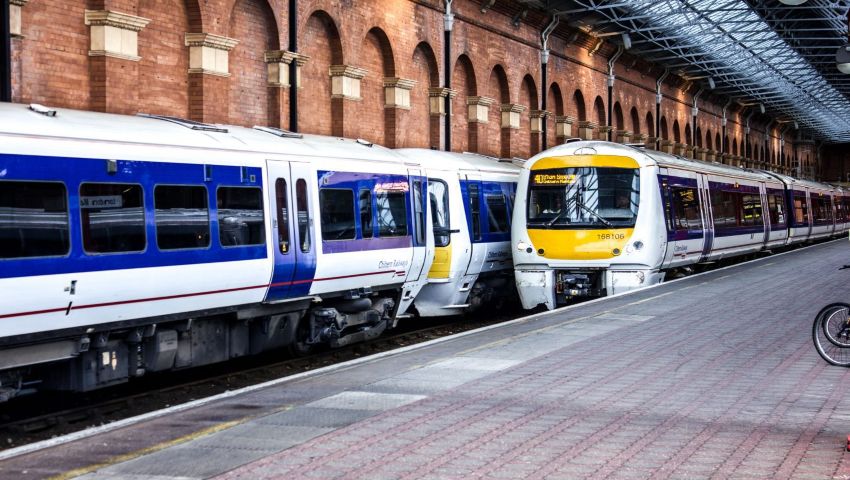
Train operators serving Oxford in 2026 include Great Western Railway (GWR), Chiltern Railways, and CrossCountry.
Typical journey times:
- Oxford → London Paddington: 55–65 minutes
- Oxford → Birmingham: 1 hour 20 minutes
- Oxford → Manchester: 2 hours 50 minutes
Advance tickets can start from £12–£20, while peak Anytime fares can exceed £45. Booking early matters.
Oxford does not have trams or a metro. Buses fill that role.
Taxis in Oxford: Regulated and Predictable
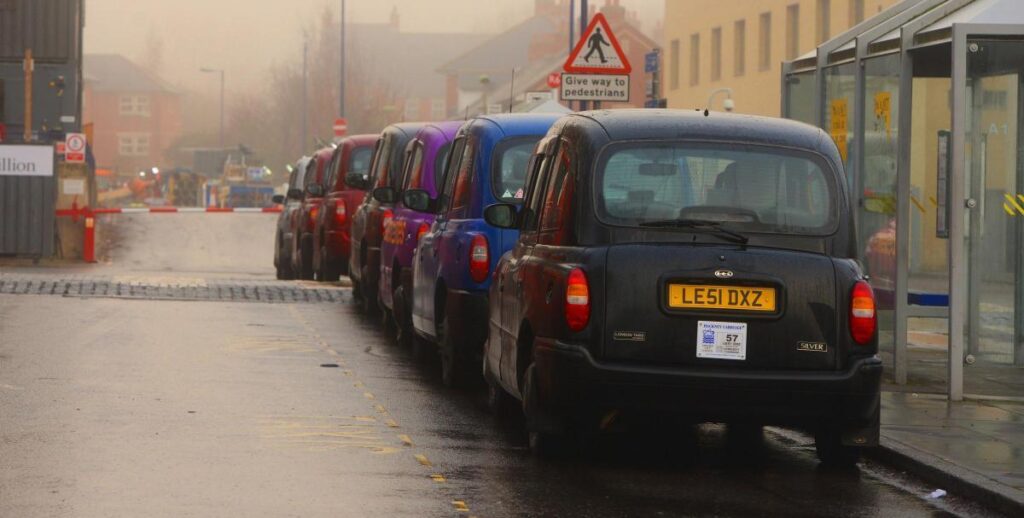
Oxford’s black Hackney carriages are tightly regulated by Oxford City Council.
As of the current tariff (effective from February 2024 and still in force in 2026):
- Starting fare (day): £2.80
- Night rates apply from 10:00 pm
- Waiting time: £20 per hour
- Extra passengers: £0.30 each
Main taxi ranks include Carfax, Gloucester Green, Oxford Railway Station, and Cowley Road.
Uber in Oxford: The Quiet Return
For years, the answer was simple: Uber doesn’t operate in Oxford.
That is no longer true.
Uber officially returned to Oxford in February 2025 after receiving a private hire operator licence from Oxford City Council.
In 2026, you can book UberX across the city. Typical prices:
- City centre → Cowley: £9–£12
- City centre → Summertown: £10–£14
- Oxford Station → Botley: £15–£18
Availability fluctuates during term breaks, when student demand drops.
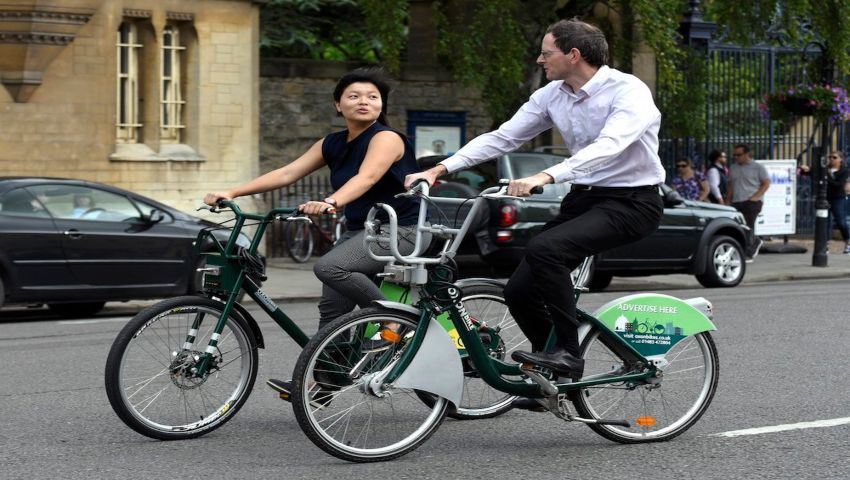
Cycling in Oxford: Still the Smartest Move
Oxford consistently ranks among the top UK cities for cycling to work.
Bike hire options in 2026 include:
Expect to pay around £15–£25 per day for standard bikes, more for electric models. Dedicated cycle lanes and traffic-calmed streets make cycling practical, not heroic.
Oxford doesn’t reward speed. It rewards understanding.
If you treat it like a car city, you’ll lose time. If you treat it like a walking city, you’ll miss its scale. But if you use buses, bikes, and targeted taxis the way locals do, Oxford suddenly feels small again—in the best way.